A prepaid subscriber out of credit cannot use data, so an app-based top-up is the one thing they cannot reach. USSD TopUp works on the signalling channel: dial a short code, enter a voucher, and the balance updates in real time. It reaches the subscriber who has run dry, which is exactly the one trying to pay you.
Recharge is the most time-sensitive transaction on a prepaid network. The subscriber wants to spend money, and the operator wants to take it, but the moment of payment is exactly when the subscriber has no balance. An app needs data. A data top-up needs credit the subscriber does not have. The recharge journey breaks at the worst possible point.
USSD does not have that dependency. It runs on the signalling channel, so it works with no balance, no data plan, and no app installed. For a subscriber roaming abroad, it still works. The recharge has to be reachable from the state the subscriber is actually in: empty.

Subscriber dials the short code — USSD session opens
USSD TopUp is real-time recharge over USSD. The subscriber dials a short code, chooses a top-up method, enters the voucher or PIN, confirms the amount, and the balance is credited immediately. The exchange runs as an interactive session on the signalling channel, so it does not depend on a data connection or an SMSC, and the response is faster than SMS.
Menu Browser guides the top-up — no app, no data
The platform is the proven Ouroboros USSD solution, deployed across many network sizes worldwide. It handles traffic from 1 USSD request per second for a start-up operator up to 2,000+ USSD events per second, and the same technology works for roaming subscribers at a lower carriage cost than SMS. Because USSD is supported by close to every handset without any change on the device, recharge reaches the whole prepaid base, not just smartphone users.
Balance credited immediately — faster than SMS
New recharge flows and value-added top-up services deploy through the Menu Browser, so commercial teams add or change menus without a core reconfiguration.
USSD Top-Up — self-care top-up session
Voucher recharge, feature-phone top-up, roaming recharge, third-party VAS — no app required.
Voucher and PIN recharge
A subscriber dials the operator's short code, enters the voucher or PIN from a scratch card or receipt, and confirms the amount. The balance updates within the session, before they end the call.
Recharge for feature phones and the unbanked
Subscribers on basic handsets, and those without app-based payment, recharge through the same menu as smartphone users. USSD is supported by close to every handset with no change on the device, so top-up reaches the entire prepaid base.
Roaming recharge
A subscriber abroad recharges over USSD while roaming, at a lower carriage cost than SMS, without needing a local data connection.
Third-party and promotional top-up
New recharge methods and promotional offers deploy through the Menu Browser, so commercial teams launch them without a gateway reconfiguration cycle.

We've selected Ouroboros because it was the best company capable of fulfilling our need for a scalable and virtualised full MVNO platform. Moreover, the Ouroboros team is pragmatic, flexible and responsive.
Pascal Prot
CEO-CTO · Legos
Works with no balance, no data, no app
Recharge runs on the signalling channel rather than over data. The subscriber who has run out of credit can still reach the top-up flow to pay.
~99% handset coverage
USSD is understood by almost every handset with no change on the device. Recharge reaches the entire prepaid base, including basic feature phones.
Roaming recharge at lower cost
Top-up works for roaming subscribers at a lower carriage cost than SMS. Subscribers keep recharging abroad, and the operator carries it more cheaply.
1 to 2,000+ USSD events/s
The platform scales from a start-up operator's volume to high transaction rates. The same solution serves a launch network and a large prepaid base without a platform change.
Menu Browser for new flows
Recharge menus and value-added top-up services deploy through a management interface. Commercial teams launch new top-up methods without a core reconfiguration cycle.
No SMSC dependency
Recharge does not route through the SMSC, unlike SMS-based top-up. One fewer element in the recharge path, and a faster, more predictable response.
Recharge revenue depends on reaching the subscriber at the exact moment they have no balance, and USSD is the one channel that still works in that state. The Ouroboros USSD TopUp runs on the signalling channel, reaches close to every handset, and works while roaming, so the recharge journey does not break where it matters most.
It is the proven Ouroboros USSD platform, deployed across 30+ countries and scaling from 1 to 2,000+ events per second. Carrier-grade and in production since 2004.
OPEX rental is available, which keeps the recharge platform proportional to the traffic it carries.

How do your prepaid subscribers recharge today, and what share are on feature phones or roaming? We'll map a USSD TopUp deployment that reaches them with no app and no data.
 Product datasheet
Charging · Charging & Billing
USSD TopUp
A prepaid subscriber out of credit cannot use data, so an app-based top-up is the one thing they cannot reach. USSD TopUp works on the signalling channel: dial a short code, enter a voucher, and the balance updates in real time. It reaches the subscriber who has run dry, which is exactly the one trying to pay you.
Deployed across 30+ countries · 1 to 2,000+ USSD events/s per node
The subscriber out of credit cannot use your app to pay you
Recharge is the most time-sensitive transaction on a prepaid network. The subscriber wants to spend money, and the operator wants to take it, but the moment of payment is exactly when the subscriber has no balance. An app needs data. A data top-up needs credit the subscriber does not have. The recharge journey breaks at the worst possible point.
USSD does not have that dependency. It runs on the signalling channel, so it works with no balance, no data plan, and no app installed. For a subscriber roaming abroad, it still works. The recharge has to be reachable from the state the subscriber is actually in: empty.
Short code. Voucher. Balance credited in real time.
Subscriber dials the short code — USSD session opens
USSD TopUp is real-time recharge over USSD. The subscriber dials a short code, chooses a top-up method, enters the voucher or PIN, confirms the amount, and the balance is credited immediately. The exchange runs as an interactive session on the signalling channel, so it does not depend on a data connection or an SMSC, and the response is faster than SMS.
Menu Browser guides the top-up — no app, no data
The platform is the proven Ouroboros USSD solution, deployed across many network sizes worldwide. It handles traffic from 1 USSD request per second for a start-up operator up to 2,000+ USSD events per second, and the same technology works for roaming subscribers at a lower carriage cost than SMS. Because USSD is supported by close to every handset without any change on the device, recharge reaches the whole prepaid base, not just smartphone users.
Balance credited immediately — faster than SMS
New recharge flows and value-added top-up services deploy through the Menu Browser, so commercial teams add or change menus without a core reconfiguration.
USSD Top-Up — self-care top-up session
How operators use it.
Voucher recharge, feature-phone top-up, roaming recharge, third-party VAS — no app required.
Voucher and PIN recharge
A subscriber dials the operator's short code, enters the voucher or PIN from a scratch card or receipt, and confirms the amount. The balance updates within the session, before they end the call.
Recharge for feature phones and the unbanked
Subscribers on basic handsets, and those without app-based payment, recharge through the same menu as smartphone users. USSD is supported by close to every handset with no change on the device, so top-up reaches the entire prepaid base.
Roaming recharge
A subscriber abroad recharges over USSD while roaming, at a lower carriage cost than SMS, without needing a local data connection.
Third-party and promotional top-up
New recharge methods and promotional offers deploy through the Menu Browser, so commercial teams launch them without a gateway reconfiguration cycle.
Specifications.
Inside the platform.
Works with no balance, no data, no app
Recharge runs on the signalling channel rather than over data. The subscriber who has run out of credit can still reach the top-up flow to pay.
~99% handset coverage
USSD is understood by almost every handset with no change on the device. Recharge reaches the entire prepaid base, including basic feature phones.
Roaming recharge at lower cost
Top-up works for roaming subscribers at a lower carriage cost than SMS. Subscribers keep recharging abroad, and the operator carries it more cheaply.
1 to 2,000+ USSD events/s
The platform scales from a start-up operator's volume to high transaction rates. The same solution serves a launch network and a large prepaid base without a platform change.
Menu Browser for new flows
Recharge menus and value-added top-up services deploy through a management interface. Commercial teams launch new top-up methods without a core reconfiguration cycle.
No SMSC dependency
Recharge does not route through the SMSC, unlike SMS-based top-up. One fewer element in the recharge path, and a faster, more predictable response.
Recharge revenue depends on reaching the subscriber at the exact moment they have no balance, and USSD is the one channel that still works in that state. The Ouroboros USSD TopUp runs on the signalling channel, reaches close to every handset, and works while roaming, so the recharge journey does not break where it matters most.
It is the proven Ouroboros USSD platform, deployed across 30+ countries and scaling from 1 to 2,000+ events per second. Carrier-grade and in production since 2004.
OPEX rental is available, which keeps the recharge platform proportional to the traffic it carries.
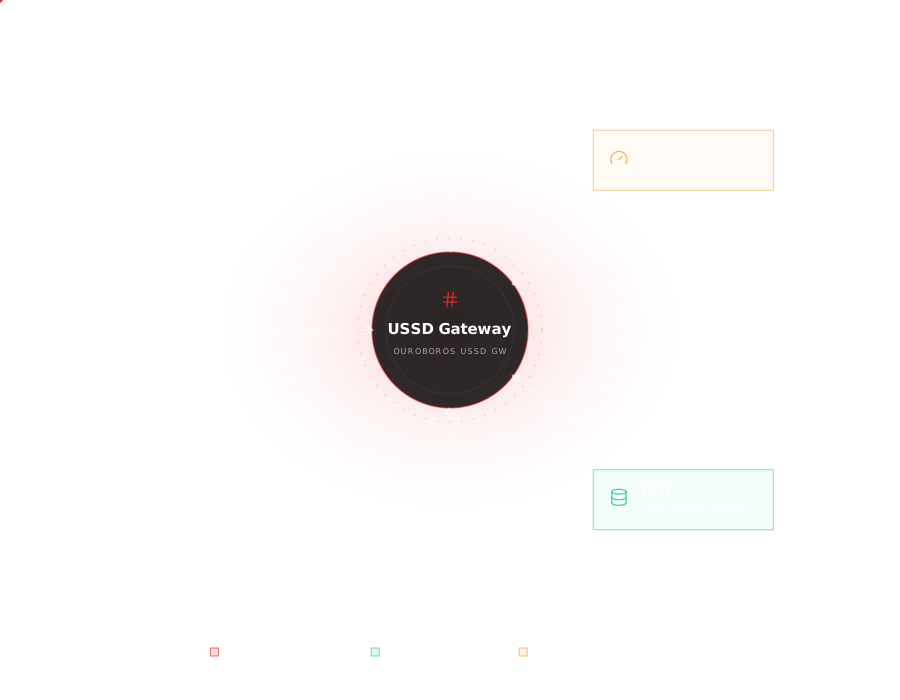
USSD Gateway
USSD TopUp runs on the Ouroboros USSD Gateway. Operators deploying broader interactive USSD services use the full gateway, with top-up as one of the flows.
OCS
A top-up credits the subscriber balance held in the charging system. USSD TopUp and the OCS form the recharge-to-balance path.
SMSC
USSD TopUp avoids the SMSC for recharge, while the SMSC handles store-and-forward messaging alongside it.
Next step
Losing recharges because the top-up needs data the subscriber does not have?
How do your prepaid subscribers recharge today, and what share are on feature phones or roaming? We'll map a USSD TopUp deployment that reaches them with no app and no data.