Prepaid voice and SMS on a 2G or 3G network are charged through CAMEL triggers, not Diameter. The IN-SCP is what answers those triggers in real time, authorises the call, and decrements the balance. It is the charging brain of the legacy network, and it bridges that traffic to a convergent OCS.
On a 2G or 3G network, prepaid charging runs through Intelligent Network logic. Without a central IN-SCP, that logic sits in individual switches. A change to a charging rule means reprogramming every MSC, and a switch that drifts out of sync charges the same call differently from the one next to it.
There is also the convergence problem. A subscriber on prepaid voice today is on LTE data tomorrow. CAMEL charges the voice. Diameter charges the data. If those two run as separate billing systems, the operator reconciles two balances for one subscriber. The charging layer needs to centralise the IN logic and connect to a convergent charging system, not stand apart from it.

CAMEL trigger arrives — SCP authorises in real time
The Ouroboros IN-SCP is a complete implementation of the gsmSCF and fix SCF functions. The GMSC and SMSC trigger CAMEL when a chargeable event occurs. The SCP authorises the call or message in real time, applies the charging plan, and returns the instruction to the switch. The charging logic lives in one place, so a rule change is made once and applies across every switch.
Charging logic lives once — rule change applies everywhere
For convergent billing, the SCP acts as a Diameter Agent to the OCS over the Ro interface, so 2G/3G prepaid traffic and LTE traffic charge against the same system. Where a network is moving from 2G/3G toward 4G, the reverse IM-SSF lets services built for IMS and SIP run inside the traditional GSM service context. Where a legacy billing SCP must stay live during transition, the SCP Relay forwards CAMEL triggers to it so both run in parallel.
Diameter Agent to the OCS: one balance across 2G, 3G, and LTE
Beyond charging, the same platform covers number translation, call/SMS/data filtering, and failed-call forwarding to voicemail. Core protocols are CAMEL, MAP, and INAP, with service data point integration over RPC-XML, SOAP, JSON-RPC, SIP, or Diameter.
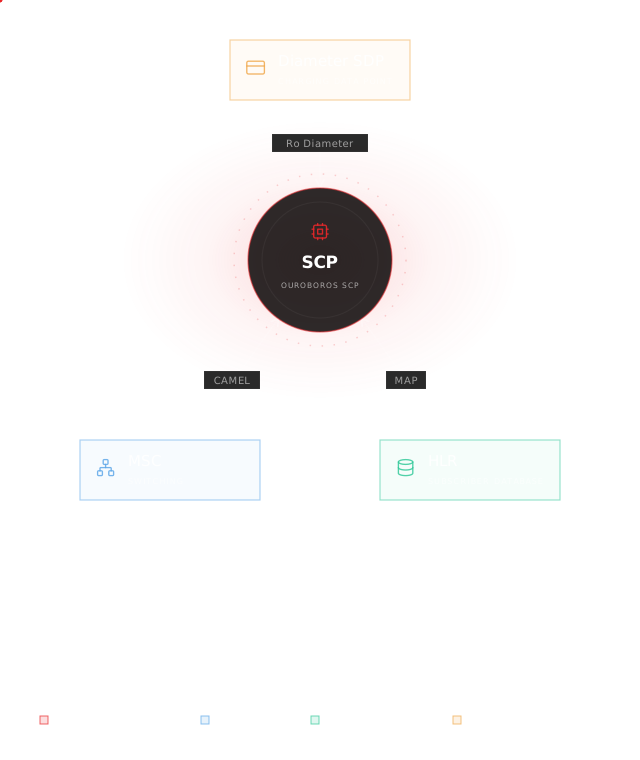
SCP charging chain — CAMEL · MAP · Ro Diameter
Prepaid voice charging, convergent billing, card calling, 4G migration — IN charging centralised.
Real-time prepaid voice and SMS charging
CAMEL triggers from the GMSC and SMSC reach the SCP on every chargeable event. The SCP checks balance, applies the plan, and authorises or blocks in real time, with the logic held centrally rather than per switch.
Convergent billing with the OCS
The Diameter Agent connects the SCP to the OCS over Ro, so 2G/3G prepaid traffic and LTE traffic bill through one charging system. One balance per subscriber across generations.
Prepaid card and credit-card calling
The SCP handles billing services from prepaid cards through to credit-card calling, applying the charging logic at the point the call is set up.
4G migration without an IN cut-over
The reverse IM-SSF runs IMS and SIP services in the GSM service context, and the SCP Relay keeps a legacy billing SCP live in parallel. Charging continuity holds while subscribers move to LTE.
We've selected Ouroboros because it was the best company capable of fulfilling our need for a scalable and virtualised full MVNO platform. Moreover, the Ouroboros team is pragmatic, flexible and responsive.
Pascal Prot
CEO-CTO · Legos
Centralised CAMEL charging logic
gsmSCF and fix SCF charging logic lives on the SCP, not in each switch. A charging rule change is made once and applies across every switch consistently.
Diameter Agent to the OCS
The SCP connects to the OCS over Ro for convergent IMS/NSS charging. 2G/3G prepaid and LTE traffic bill through one system. One balance per subscriber.
Reverse IM-SSF
IMS and SIP services run inside the traditional GSM service context during migration. Operators activate LTE services without cutting the IN charging layer over at once.
SCP Relay
CAMEL triggers forward to a legacy billing SCP so both run in parallel. Migration proceeds at the operator's pace, with legacy billing live until decommissioned.
Multi-protocol IN support
CAMEL, MAP, and INAP are supported natively, with SDP integration over several protocols. Mixed CAMEL and INAP environments charge without a mediation layer between elements.
Charging plus service control
The same platform handles number translation, filtering, and VMS alongside charging. Operators run prepaid charging and IN services from one deployment, not separate systems.
Prepaid charging on a legacy network is an IN problem, and the IN-SCP is where it is solved. Centralising the CAMEL logic removes the per-switch drift that causes inconsistent charging, and the Diameter Agent to the OCS means the same subscriber does not end up with one balance for voice and another for data.
The migration features are the part that matters on a 4G timeline. The reverse IM-SSF and SCP Relay let the charging layer move at the operator's pace rather than forcing a cut-over. Carrier-grade and in production since 2004.
OPEX rental is available.

Walk us through your IN setup: charging triggers, prepaid platform, and where 4G migration stands. We'll propose an IN-SCP charging configuration that centralises it and connects to a convergent OCS.
 Product datasheet
Charging · Charging & Billing
SCP Billing (IN-SCP)
Prepaid voice and SMS on a 2G or 3G network are charged through CAMEL triggers, not Diameter. The IN-SCP is what answers those triggers in real time, authorises the call, and decrements the balance. It is the charging brain of the legacy network, and it bridges that traffic to a convergent OCS.
In production since 2004 · 148M+ subscribers · OPEX rental available
Charging logic that lives in the switch
On a 2G or 3G network, prepaid charging runs through Intelligent Network logic. Without a central IN-SCP, that logic sits in individual switches. A change to a charging rule means reprogramming every MSC, and a switch that drifts out of sync charges the same call differently from the one next to it.
There is also the convergence problem. A subscriber on prepaid voice today is on LTE data tomorrow. CAMEL charges the voice. Diameter charges the data. If those two run as separate billing systems, the operator reconciles two balances for one subscriber. The charging layer needs to centralise the IN logic and connect to a convergent charging system, not stand apart from it.
Centralised IN charging. One rule. Every switch.
CAMEL trigger arrives — SCP authorises in real time
The Ouroboros IN-SCP is a complete implementation of the gsmSCF and fix SCF functions. The GMSC and SMSC trigger CAMEL when a chargeable event occurs. The SCP authorises the call or message in real time, applies the charging plan, and returns the instruction to the switch. The charging logic lives in one place, so a rule change is made once and applies across every switch.
Charging logic lives once — rule change applies everywhere
For convergent billing, the SCP acts as a Diameter Agent to the OCS over the Ro interface, so 2G/3G prepaid traffic and LTE traffic charge against the same system. Where a network is moving from 2G/3G toward 4G, the reverse IM-SSF lets services built for IMS and SIP run inside the traditional GSM service context. Where a legacy billing SCP must stay live during transition, the SCP Relay forwards CAMEL triggers to it so both run in parallel.
Diameter Agent to the OCS: one balance across 2G, 3G, and LTE
Beyond charging, the same platform covers number translation, call/SMS/data filtering, and failed-call forwarding to voicemail. Core protocols are CAMEL, MAP, and INAP, with service data point integration over RPC-XML, SOAP, JSON-RPC, SIP, or Diameter.
SCP charging chain — CAMEL · MAP · Ro Diameter
How operators use it.
Prepaid voice charging, convergent billing, card calling, 4G migration — IN charging centralised.
Real-time prepaid voice and SMS charging
CAMEL triggers from the GMSC and SMSC reach the SCP on every chargeable event. The SCP checks balance, applies the plan, and authorises or blocks in real time, with the logic held centrally rather than per switch.
Convergent billing with the OCS
The Diameter Agent connects the SCP to the OCS over Ro, so 2G/3G prepaid traffic and LTE traffic bill through one charging system. One balance per subscriber across generations.
Prepaid card and credit-card calling
The SCP handles billing services from prepaid cards through to credit-card calling, applying the charging logic at the point the call is set up.
4G migration without an IN cut-over
The reverse IM-SSF runs IMS and SIP services in the GSM service context, and the SCP Relay keeps a legacy billing SCP live in parallel. Charging continuity holds while subscribers move to LTE.
Specifications.
Inside the platform.
Centralised CAMEL charging logic
gsmSCF and fix SCF charging logic lives on the SCP, not in each switch. A charging rule change is made once and applies across every switch consistently.
Diameter Agent to the OCS
The SCP connects to the OCS over Ro for convergent IMS/NSS charging. 2G/3G prepaid and LTE traffic bill through one system. One balance per subscriber.
Reverse IM-SSF
IMS and SIP services run inside the traditional GSM service context during migration. Operators activate LTE services without cutting the IN charging layer over at once.
SCP Relay
CAMEL triggers forward to a legacy billing SCP so both run in parallel. Migration proceeds at the operator's pace, with legacy billing live until decommissioned.
Multi-protocol IN support
CAMEL, MAP, and INAP are supported natively, with SDP integration over several protocols. Mixed CAMEL and INAP environments charge without a mediation layer between elements.
Charging plus service control
The same platform handles number translation, filtering, and VMS alongside charging. Operators run prepaid charging and IN services from one deployment, not separate systems.
Prepaid charging on a legacy network is an IN problem, and the IN-SCP is where it is solved. Centralising the CAMEL logic removes the per-switch drift that causes inconsistent charging, and the Diameter Agent to the OCS means the same subscriber does not end up with one balance for voice and another for data.
The migration features are the part that matters on a 4G timeline. The reverse IM-SSF and SCP Relay let the charging layer move at the operator's pace rather than forcing a cut-over. Carrier-grade and in production since 2004.
OPEX rental is available.
Service Control Point (SCP)
The full IN-SCP product, covering service control, number translation, and filtering alongside the charging role described here.
OCS
The SCP connects to the OCS over Ro for convergent prepaid charging across 2G/3G and LTE.
GMSC
CAMEL triggers from the GMSC reach the SCP on inbound and outbound calls for real-time charging.
Next step
Charging prepaid voice per switch instead of from one place?
Walk us through your IN setup: charging triggers, prepaid platform, and where 4G migration stands. We'll propose an IN-SCP charging configuration that centralises it and connects to a convergent OCS.