Without a centralised SCP, every billing change touches every switch. Deploy one platform for prepaid billing, number translation, call filtering, and VMS — and migrate to 4G without a forced cut-over.
Without a centralised SCP, IN service logic lives in individual switches. A billing rule change means reprogramming every MSC separately. In a network with multiple switches, one out of sync means inconsistent behaviour across the network — a call that charges correctly on one route and incorrectly on another.
As the service catalogue grows, the complexity compounds. Abbreviated dialling, virtual numbers, conference calling, voicemail forwarding: each new service is another per-switch configuration to maintain. Changes slow down. The risk of an error that affects live traffic rises with every new rule added.
There is also the 4G migration problem. Moving subscribers to LTE means IMS. IMS and traditional GSM billing are different environments. A hard cut-over at migration forces new billing logic, new service configurations, and a network risk event at exactly the moment when operator and engineering teams have the least capacity to absorb it.

Service logic moves to one place
In a network without a centralised SCP, every service decision — charge this call, translate this number, block this traffic, forward to voicemail — is a per-switch problem. The SCP moves all of that logic to one place. The GMSC and SMSC trigger CAMEL when a qualifying event occurs. The SCP decides what happens next and returns the instruction to the originating network element. One configuration point for the entire service layer.
Full gsmSCF and fix SCF
The Ouroboros IN-SCP implements the full gsmSCF and fix SCF function. Core protocols are CAMEL, MAP, and INAP. SDP integration connects via RPC-XML, SOAP, JSON-RPC, SIP, or Diameter.
Convergent billing, gradual migration
The Diameter Agent connects to an OCS via the Ro interface for convergent IMS/NSS billing — LTE and 2G/3G subscribers billing through the same charging system. The reverse IM-SSF runs IMS and SIP services inside the traditional GSM service context during 4G migration, so operators move subscribers to LTE gradually without cutting the entire IN layer over at once. The SCP Relay forwards CAMEL triggers to a legacy billing SCP where both systems need to run in parallel during transition.
The full service catalogue
Services covered: prepaid and postpaid billing, abbreviated dialling, virtual numbers, conference meet-me, call filtering, SMS filtering, data filtering, and VMS failed call forwarding.
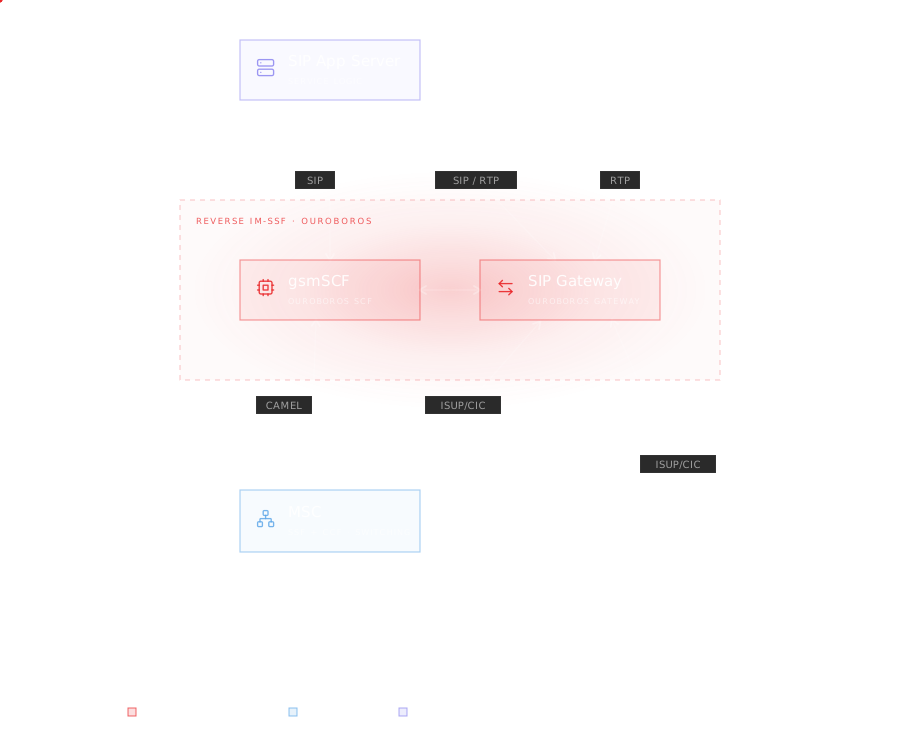
Reverse IM-SSF — CAMEL to SIP service bridging
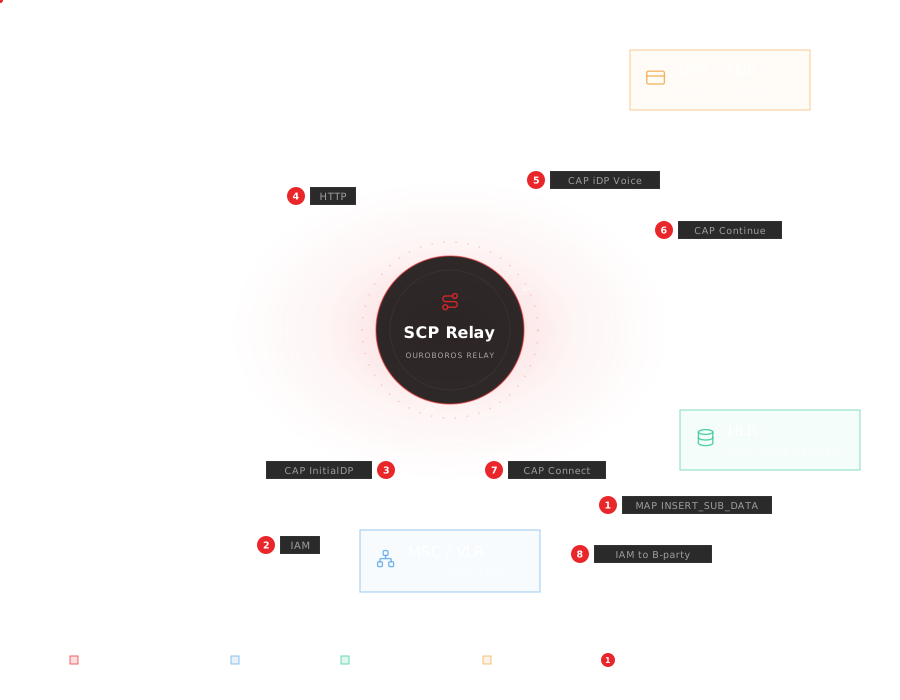
SCP Relay — call setup sequence 01–08
Billing, number translation, filtering, VMS — and a 4G migration that runs at your pace, not the vendor's.
Centralised prepaid and postpaid billing
CAMEL triggers from the GMSC reach the SCP on every qualifying call. The SCP checks balance, applies the charging plan, and authorises or blocks in real time. The same platform handles postpaid logic for hybrid subscriber bases.
Number translation services
Abbreviated dialling, virtual numbers, and conference meet-me all resolve via the SCP. A subscriber dials a short code. The SCP translates to the destination and returns the route to the switch. No per-switch configuration required.
Call, SMS, and data filtering
Filtering rules are defined once on the SCP and applied via CAMEL triggers across all relevant network elements: by number, content class, or time of day. Parental controls, enterprise restrictions, and regulatory compliance filters all deploy from one interface.
VMS failed call handling
When a call goes unanswered, the SCP instructs the network element to forward to voicemail. No switch-level VMS configuration. Rules change on the SCP without touching the switch.
4G migration at your own pace
The reverse IM-SSF keeps IMS and SIP services running inside the traditional GSM service context while operators move subscribers to LTE. The SCP Relay keeps legacy billing live in parallel. No forced cut-over. No service disruption during migration.

We've selected Ouroboros because it was the best company capable of fulfilling our need for a scalable and virtualised full MVNO platform. Moreover, the Ouroboros team is pragmatic, flexible and responsive.
Pascal Prot
CEO-CTO · Legos
Full gsmSCF and fix SCF
The SCP implements both mobile (gsmSCF) and fixed network (fix SCF) service control in one platform. Operators with fixed-mobile convergence run both under one SCP, not two separate deployments.
Diameter Agent — Ro interface
Connects the SCP to an OCS via Ro Diameter for convergent billing across IMS and traditional NSS. LTE and 2G/3G subscribers bill through the same OCS without separate charging gateways per generation.
Reverse IM-SSF
Runs IMS and SIP services inside the traditional GSM service execution environment during 4G migration. Operators activate IMS services for LTE subscribers without cutting the entire IN service layer over at migration.
SCP Relay
Forwards CAMEL triggers to a legacy billing SCP. Both SCPs run in parallel during transition. Migration proceeds at the operator's pace. Legacy billing stays live until it is formally decommissioned.
Centralised filtering across calls, SMS, and data
Filtering rules defined once on the SCP apply via CAMEL triggers across all relevant network elements. A parental control change or a regulatory filter update propagates to the entire network from one configuration point.
CAMEL, MAP, and INAP in one platform
All three IN signalling protocols are supported natively. No separate INAP gateway for legacy services. Mixed CAMEL and INAP environments work without a mediation layer between the SCP and older network elements.
Most operators running IN services have grown their service catalogue on top of per-switch configurations. The Ouroboros IN-SCP consolidates billing, number translation, filtering, and VMS handling into one platform. Configuration changes deploy once and apply everywhere.
The SCP Relay and reverse IM-SSF are the features that make the difference at migration time. They exist specifically so operators can move to 4G at their own pace — not at the pace forced by a hard IN cut-over.
OPEX rental is available. For operators who want a centralised IN platform without a large upfront commitment, cost scales with the network.

Tell us your current IN architecture: billing platform, number services, filtering requirements, and where you are with 4G migration. We'll propose an SCP configuration that fits what you have today.
 Product datasheet
2G / 3G · 2G/3G Core
Service Control Point (SCP)
Without a centralised SCP, every billing change touches every switch. Deploy one platform for prepaid billing, number translation, call filtering, and VMS — and migrate to 4G without a forced cut-over.
Part of the platform running 148M+ subscribers · OPEX rental available
When IN logic lives inside the switch
Without a centralised SCP, IN service logic lives in individual switches. A billing rule change means reprogramming every MSC separately. In a network with multiple switches, one out of sync means inconsistent behaviour across the network — a call that charges correctly on one route and incorrectly on another.
As the service catalogue grows, the complexity compounds. Abbreviated dialling, virtual numbers, conference calling, voicemail forwarding: each new service is another per-switch configuration to maintain. Changes slow down. The risk of an error that affects live traffic rises with every new rule added.
There is also the 4G migration problem. Moving subscribers to LTE means IMS. IMS and traditional GSM billing are different environments. A hard cut-over at migration forces new billing logic, new service configurations, and a network risk event at exactly the moment when operator and engineering teams have the least capacity to absorb it.
One configuration point for the entire service layer.
Service logic moves to one place
In a network without a centralised SCP, every service decision — charge this call, translate this number, block this traffic, forward to voicemail — is a per-switch problem. The SCP moves all of that logic to one place. The GMSC and SMSC trigger CAMEL when a qualifying event occurs. The SCP decides what happens next and returns the instruction to the originating network element. One configuration point for the entire service layer.
Full gsmSCF and fix SCF
The Ouroboros IN-SCP implements the full gsmSCF and fix SCF function. Core protocols are CAMEL, MAP, and INAP. SDP integration connects via RPC-XML, SOAP, JSON-RPC, SIP, or Diameter.
Convergent billing, gradual migration
The Diameter Agent connects to an OCS via the Ro interface for convergent IMS/NSS billing — LTE and 2G/3G subscribers billing through the same charging system. The reverse IM-SSF runs IMS and SIP services inside the traditional GSM service context during 4G migration, so operators move subscribers to LTE gradually without cutting the entire IN layer over at once. The SCP Relay forwards CAMEL triggers to a legacy billing SCP where both systems need to run in parallel during transition.
The full service catalogue
Services covered: prepaid and postpaid billing, abbreviated dialling, virtual numbers, conference meet-me, call filtering, SMS filtering, data filtering, and VMS failed call forwarding.
Reverse IM-SSF — CAMEL to SIP service bridging · 1/2
SCP Relay — call setup sequence 01–08 · 2/2
How operators use it.
Billing, number translation, filtering, VMS — and a 4G migration that runs at your pace, not the vendor's.
Centralised prepaid and postpaid billing
CAMEL triggers from the GMSC reach the SCP on every qualifying call. The SCP checks balance, applies the charging plan, and authorises or blocks in real time. The same platform handles postpaid logic for hybrid subscriber bases.
Number translation services
Abbreviated dialling, virtual numbers, and conference meet-me all resolve via the SCP. A subscriber dials a short code. The SCP translates to the destination and returns the route to the switch. No per-switch configuration required.
Call, SMS, and data filtering
Filtering rules are defined once on the SCP and applied via CAMEL triggers across all relevant network elements: by number, content class, or time of day. Parental controls, enterprise restrictions, and regulatory compliance filters all deploy from one interface.
VMS failed call handling
When a call goes unanswered, the SCP instructs the network element to forward to voicemail. No switch-level VMS configuration. Rules change on the SCP without touching the switch.
4G migration at your own pace
The reverse IM-SSF keeps IMS and SIP services running inside the traditional GSM service context while operators move subscribers to LTE. The SCP Relay keeps legacy billing live in parallel. No forced cut-over. No service disruption during migration.
Specifications.
Inside the platform.
Full gsmSCF and fix SCF
The SCP implements both mobile (gsmSCF) and fixed network (fix SCF) service control in one platform. Operators with fixed-mobile convergence run both under one SCP, not two separate deployments.
Diameter Agent — Ro interface
Connects the SCP to an OCS via Ro Diameter for convergent billing across IMS and traditional NSS. LTE and 2G/3G subscribers bill through the same OCS without separate charging gateways per generation.
Reverse IM-SSF
Runs IMS and SIP services inside the traditional GSM service execution environment during 4G migration. Operators activate IMS services for LTE subscribers without cutting the entire IN service layer over at migration.
SCP Relay
Forwards CAMEL triggers to a legacy billing SCP. Both SCPs run in parallel during transition. Migration proceeds at the operator's pace. Legacy billing stays live until it is formally decommissioned.
Centralised filtering across calls, SMS, and data
Filtering rules defined once on the SCP apply via CAMEL triggers across all relevant network elements. A parental control change or a regulatory filter update propagates to the entire network from one configuration point.
CAMEL, MAP, and INAP in one platform
All three IN signalling protocols are supported natively. No separate INAP gateway for legacy services. Mixed CAMEL and INAP environments work without a mediation layer between the SCP and older network elements.
Most operators running IN services have grown their service catalogue on top of per-switch configurations. The Ouroboros IN-SCP consolidates billing, number translation, filtering, and VMS handling into one platform. Configuration changes deploy once and apply everywhere.
The SCP Relay and reverse IM-SSF are the features that make the difference at migration time. They exist specifically so operators can move to 4G at their own pace — not at the pace forced by a hard IN cut-over.
OPEX rental is available. For operators who want a centralised IN platform without a large upfront commitment, cost scales with the network.
Gateway MSC (GMSC)
CAMEL triggers from the GMSC reach the SCP on inbound and outbound calls for real-time billing and IN service execution.
SMSC & SMS Firewall
SMS billing and filtering logic applies via CAMEL triggers from the SMSC to the SCP on every qualifying message.
Next step
How many switches does a billing rule change touch in your network today?
Tell us your current IN architecture: billing platform, number services, filtering requirements, and where you are with 4G migration. We'll propose an SCP configuration that fits what you have today.