4G authentication runs over Diameter and SIP. 2G and 3G authentication runs over MAP by HLR. These are different protocols, which is why most standalone HSS deployments sit alongside an existing HLR as a separate system — separate database, separate provisioning workflow, and a synchronisation layer in between.
That synchronisation layer is the problem. A subscriber provisioned in the HLR needs to appear in the HSS before they can attach to LTE. When the sync is delayed or fails, the subscriber cannot authenticate. When a service profile changes, two records need updating. Every gap between the two systems is an operational cost and a potential source of authentication failures.
Ouroboros HSS share a UDR (User Data Repository) shared by HLR, HSS, UDM, PCRF, OCS so only one point to provision

Every LTE attach starts here
Every LTE authentication starts at the HSS. When a subscriber attaches to 4G, the MME queries the HSS over the S6a Diameter interface. The HSS validates the subscriber, returns authentication vectors, and provides the subscriber profile — QoS class, APN configuration, roaming permissions. Without it, no subscriber can attach to LTE.
One UDR, shared with the HLR
The Ouroboros HSS shares its User Data Repository directly with the HLR Front-End. A subscriber provisioned once is immediately visible to both 2G MAP-based authentication and 4G Diameter-based authentication. One record. One provisioning point. No synchronisation layer to build, maintain, or debug.
AuC, EIR, and HLR built in
The integrated 4G AuC handles all LTE and IMS authentication flows. New ciphering algorithms deploy on demand without a hardware refresh. EIR and HLR functions are built in. Each subscriber can carry multiple public and private identities, such as mobile handset, PDA, and connected device, consolidated to a single bill.
Multi-tenant, to tens of millions
Roaming profiles are configurable per Visited PLMN. Multi-tenant operation lets a single node host several MCC/MNC ranges. This is useful for MVNO operators or operators running more than one licence. Scales to millions of subscribers per node vertically, horizontally to several tens of millions.
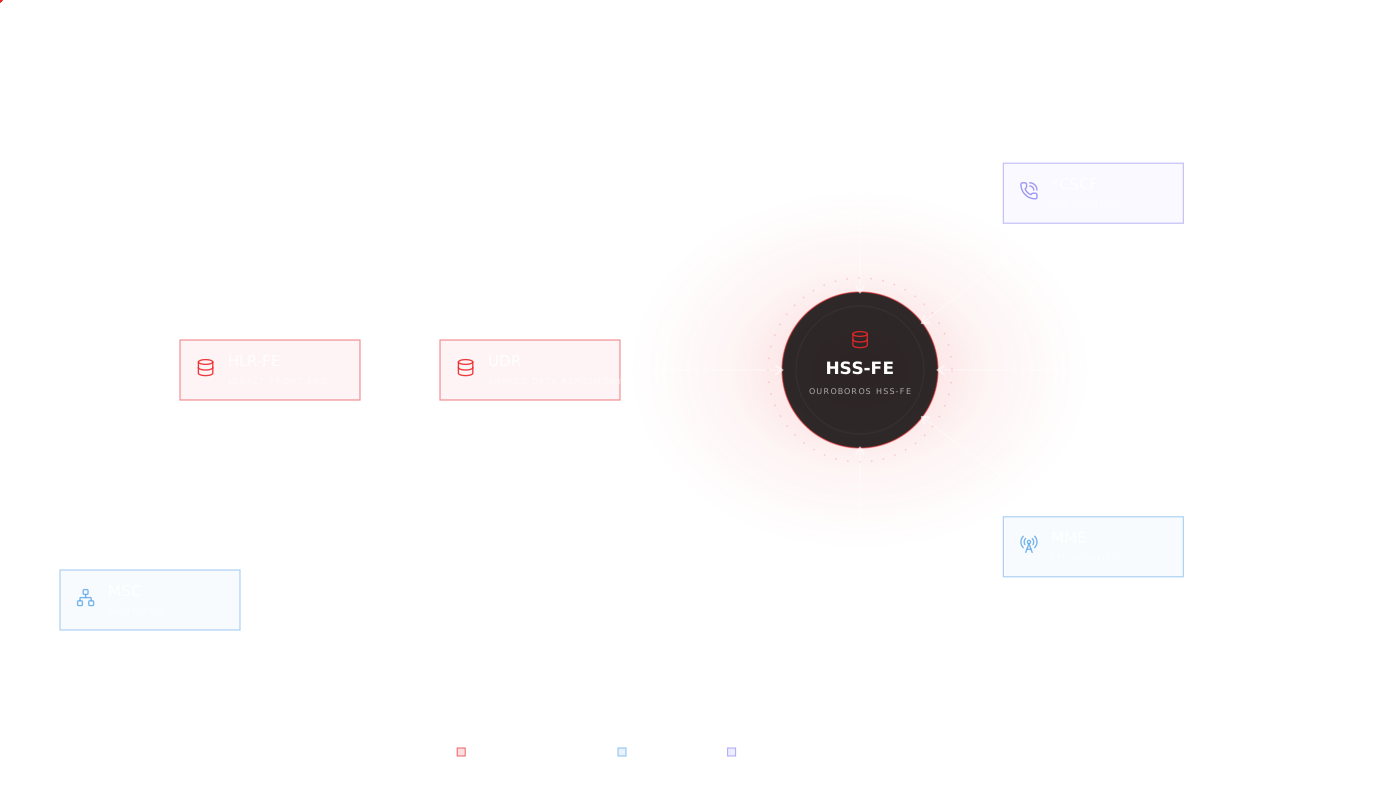
HSS-FE · shared UDR behind the legacy and LTE front ends
LTE alongside 2G, full-MVNO 4G, VoLTE, M2M fleets, national roaming — one subscriber core.
MNO deploying LTE alongside an existing 2G/3G network
The shared UDR means 4G authentication draws from the same subscriber record already in use for 2G. No migration. No parallel provisioning workflows. Subscribers move between generations transparently.
operator building a full 4G platform
MNO, MNA, MVNOs who need full subscriber ownership, not dependence on the host MNO's HSS, provision their own subscribers with multi-tenant MCC/MNC hosting for third-party OSS/BSS integration.
IMS and VoLTE deployment
VoLTE authentication requires an IMS-aware HSS. The HSS handles SIP-based subscriber registration for IMS services. Multiple public IDs per subscriber cover voice, video, and messaging identities under one account.
M2M and IoT deployments
Connected devices authenticate against the same HSS as voice subscribers. The multi-identity model handles device fleets where one SIM represents multiple logical endpoints.
Multi-operator or national roaming
Per-VPLMN roaming profiles configure different service rules for each roaming partner. An operator managing national roaming agreements assigns correct QoS and service tier per partner automatically at attach.

We've selected Ouroboros because it was the best company capable of fulfilling our need for a scalable and virtualised full MVNO platform. Moreover, the Ouroboros team is pragmatic, flexible and responsive.
Pascal Prot
CEO-CTO · Legos
Shared UDR with HLR-FE and UDM
One data repository serves both 2G MAP-based and 4G Diameter-based authentication and 5G OAI. Provision a subscriber once. Both generations see the same record immediately. No sync layer to maintain.
Integrated 4G AuC with on-demand ciphering
New authentication and ciphering algorithms activate without hardware replacement. Algorithm upgrades are configuration changes, not infrastructure projects.
Per-VPLMN roaming profiles
Each visited network carries distinct service rules, features, QoS parameters, and data plan restrictions. Roaming agreements enforce automatically at attach — no manual case-by-case handling.
Multi-identity per subscriber
A single account carries multiple IMSI or MSISDN across different device types depending of their PLMN or SIM choice. mobile is reachable by all identities.
Multi-tenant MCC/MNC support
A single node hosts multiple operator identities simultaneously with several OP/OPc. MVNO operators and multi-licence operators share infrastructure without data separation risk.
3GPP standards evolution included
Compliance tracks 3GPP release updates without additional licensing cost. Standards upgrades do not trigger a new procurement cycle.
The operational cost of running a separate HSS and HLR is the gap between them. Every provisioning error, every sync delay, every reconciliation failure between two databases is a cost that compounds as the subscriber base grows. The Ouroboros HSS removes that gap by design, holding subscriber data at the data model level rather than copying it between systems.
The platform has been in production since 2012. It runs for operators including Airnity, Dust, Legos for operators. Carrier-grade availability and 3GPP compliance are not claims here. They are a production record.
OPEX rental is available, starting at 1000 subscribers. Cost scales with the network, not with what the network might become.

What HLR are you running today, and how many subscribers sit behind it? We'll show how the shared UDR removes the synchronisation layer and what deployment looks like on your timeline.
 Product datasheet
4G / LTE · 4G/LTE
Home Subscriber Server (HSS)
Part of the Registration center, encompassing HLR and UDM.
In production since 2004 · 148M+ subscribers · 99.9999% availability
Two databases. One synchronisation problem.
4G authentication runs over Diameter and SIP. 2G and 3G authentication runs over MAP by HLR. These are different protocols, which is why most standalone HSS deployments sit alongside an existing HLR as a separate system — separate database, separate provisioning workflow, and a synchronisation layer in between.
That synchronisation layer is the problem. A subscriber provisioned in the HLR needs to appear in the HSS before they can attach to LTE. When the sync is delayed or fails, the subscriber cannot authenticate. When a service profile changes, two records need updating. Every gap between the two systems is an operational cost and a potential source of authentication failures.
Ouroboros HSS share a UDR (User Data Repository) shared by HLR, HSS, UDM, PCRF, OCS so only one point to provision
One record. Both generations. No sync layer.
Every LTE attach starts here
Every LTE authentication starts at the HSS. When a subscriber attaches to 4G, the MME queries the HSS over the S6a Diameter interface. The HSS validates the subscriber, returns authentication vectors, and provides the subscriber profile — QoS class, APN configuration, roaming permissions. Without it, no subscriber can attach to LTE.
One UDR, shared with the HLR
The Ouroboros HSS shares its User Data Repository directly with the HLR Front-End. A subscriber provisioned once is immediately visible to both 2G MAP-based authentication and 4G Diameter-based authentication. One record. One provisioning point. No synchronisation layer to build, maintain, or debug.
AuC, EIR, and HLR built in
The integrated 4G AuC handles all LTE and IMS authentication flows. New ciphering algorithms deploy on demand without a hardware refresh. EIR and HLR functions are built in. Each subscriber can carry multiple public and private identities, such as mobile handset, PDA, and connected device, consolidated to a single bill.
Multi-tenant, to tens of millions
Roaming profiles are configurable per Visited PLMN. Multi-tenant operation lets a single node host several MCC/MNC ranges. This is useful for MVNO operators or operators running more than one licence. Scales to millions of subscribers per node vertically, horizontally to several tens of millions.
HSS-FE · shared UDR behind the legacy and LTE front ends
How operators use it.
LTE alongside 2G, full-MVNO 4G, VoLTE, M2M fleets, national roaming — one subscriber core.
MNO deploying LTE alongside an existing 2G/3G network
The shared UDR means 4G authentication draws from the same subscriber record already in use for 2G. No migration. No parallel provisioning workflows. Subscribers move between generations transparently.
operator building a full 4G platform
MNO, MNA, MVNOs who need full subscriber ownership, not dependence on the host MNO's HSS, provision their own subscribers with multi-tenant MCC/MNC hosting for third-party OSS/BSS integration.
IMS and VoLTE deployment
VoLTE authentication requires an IMS-aware HSS. The HSS handles SIP-based subscriber registration for IMS services. Multiple public IDs per subscriber cover voice, video, and messaging identities under one account.
M2M and IoT deployments
Connected devices authenticate against the same HSS as voice subscribers. The multi-identity model handles device fleets where one SIM represents multiple logical endpoints.
Multi-operator or national roaming
Per-VPLMN roaming profiles configure different service rules for each roaming partner. An operator managing national roaming agreements assigns correct QoS and service tier per partner automatically at attach.
Specifications.
Inside the platform.
Shared UDR with HLR-FE and UDM
One data repository serves both 2G MAP-based and 4G Diameter-based authentication and 5G OAI. Provision a subscriber once. Both generations see the same record immediately. No sync layer to maintain.
Integrated 4G AuC with on-demand ciphering
New authentication and ciphering algorithms activate without hardware replacement. Algorithm upgrades are configuration changes, not infrastructure projects.
Per-VPLMN roaming profiles
Each visited network carries distinct service rules, features, QoS parameters, and data plan restrictions. Roaming agreements enforce automatically at attach — no manual case-by-case handling.
Multi-identity per subscriber
A single account carries multiple IMSI or MSISDN across different device types depending of their PLMN or SIM choice. mobile is reachable by all identities.
Multi-tenant MCC/MNC support
A single node hosts multiple operator identities simultaneously with several OP/OPc. MVNO operators and multi-licence operators share infrastructure without data separation risk.
3GPP standards evolution included
Compliance tracks 3GPP release updates without additional licensing cost. Standards upgrades do not trigger a new procurement cycle.
The operational cost of running a separate HSS and HLR is the gap between them. Every provisioning error, every sync delay, every reconciliation failure between two databases is a cost that compounds as the subscriber base grows. The Ouroboros HSS removes that gap by design, holding subscriber data at the data model level rather than copying it between systems.
The platform has been in production since 2012. It runs for operators including Airnity, Dust, Legos for operators. Carrier-grade availability and 3GPP compliance are not claims here. They are a production record.
OPEX rental is available, starting at 1000 subscribers. Cost scales with the network, not with what the network might become.
vEPC (MME/SGW/PGW)
The MME authenticates every LTE subscriber attach against the HSS over S6a. The two are designed to deploy together.
DRA
All Diameter traffic between HSS, MME, PCRF, and OCS routes through the DRA. Reduces direct peer connections and centralises signalling control.
Next step
Deploying LTE alongside an existing 2G network?
What HLR are you running today, and how many subscribers sit behind it? We'll show how the shared UDR removes the synchronisation layer and what deployment looks like on your timeline.