Every call, every SMS, every data session on your 2G/3G network depends on the HLR. Deploy one that scales from a single MVNO to a multi-brand network without a platform change or a migration event.
The HLR is not a component you migrate mid-growth. It holds every subscriber identity, every service profile, every location record on the network. A migration touches all of it — at exactly the moment when the network is busy and the business cannot afford downtime.
Most operators hit this problem in one of two ways. The first: they launched on a lightweight platform, grew past its limits, and now face a costly rebuild. The second: they are running end-of-life hardware from a tier-1 vendor whose renewal pricing no longer fits the business.
Either way, the answer should not be a rip-and-replace.

Every transaction starts here
Every call routing decision, every SMS delivery, every data session authorisation on a 2G or 3G network runs through the HLR. The MSC queries it on every transaction. A slow HLR slows the network. A failed HLR stops it.
One platform, many brands
The Ouroboros HLR stores subscriber identity (IMSI), phone number (MSISDN), subscribed services, and real-time location data for every subscriber on the platform. A single instance serves an MNO and its hosted MVNOs at the same time. Each brand gets its own isolated subscriber records, IMSIs, MSISDNs, and service profiles. No custom development. No separate deployment per tenant.
Authentication built in
Authentication is built in. The AuC runs inside the same platform — one vendor, one contract, one call when something needs fixing. New ciphering algorithms deploy on demand.
One subscriber core, shared
The subscriber database is shared with HSS, UDM, OCS, and PCRF. That means one source of truth across 2G/3G, 4G, charging, and policy systems. No duplicated records. No sync issues. No data migration project when the network adds a generation.
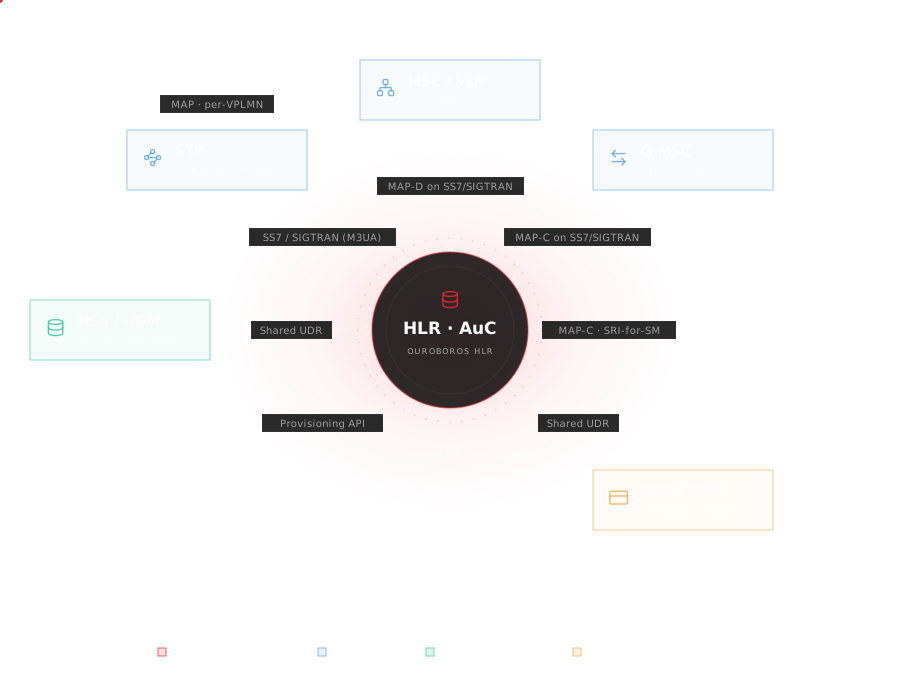
HLR · AuC — subscriber core interfaces
From a single MVNO launch to a multi-country brand portfolio — same platform, no migration events.
Hosting multiple MVNOs on one core
An MVNE or MVNA onboarding new MVNO brands runs all tenants on one HLR instance. Each tenant gets isolated subscriber records, service profiles, and roaming policies. New brands go live without a new HLR deployment.
Legacy HLR replacement
Running end-of-life hardware? The Ouroboros HLR connects via standard provisioning interfaces. The MSC, SMSC, and STP stay exactly where they are. The network does not notice the change.
M2M and multi-identifier deployments
M2M operators managing devices with multiple network identities handle complex subscriber records across IMSI, MSISDN, and operator code on one platform. No custom development required.
Roaming management per partner
Each roaming agreement gets its own access policy, configured independently per VPLMN. Commercial teams set margins and service levels at the partner level, not as a blanket network setting.

We've selected Ouroboros because it was the best company capable of fulfilling our need for a scalable and virtualised full MVNO platform. Moreover, the Ouroboros team is pragmatic, flexible and responsive.
Pascal Prot
CEO-CTO · Legos
AuC integrated
Authentication runs inside the HLR. New ciphering algorithms deploy on demand. One vendor, one contract. When authentication needs attention, one call resolves it.
One platform for multiple brands
A single HLR instance serves MNOs, MVNOs, MVNEs, and MVNAs with fully isolated tenant records with different OP/OPc. New MVNO brands go live without deploying new HLR infrastructure. Onboarding is a configuration change, not a procurement cycle.
Shared subscriber database across generations
The subscriber data repository is shared across 2G/3G (HLR), 4G (HSS), 5G SA (UDM), and charging/policy (OCS/PCRF). One record per subscriber across the full network stack. No duplicated data, no synchronisation work, no migration project when adding 4G.
Per-VPLMN roaming profiles
Each roaming partner gets its own access policy, configured independently. Margins and service levels follow the commercial agreement, not a blanket network setting.
NFV deployment
Runs on VMware, KVM, or Docker, AWS... No dedicated hardware required. Deploy on infrastructure already in place. No hardware procurement, no rack space negotiation.
Traditional tier-1 HLR vendors build for networks at tier-1 scale. The minimum deployment size, the hardware assumptions, the contract structure, and the pricing all reflect that. For operators below several million subscribers, or for anyone hosting brands that a tier-1 contract was never sized for, that is the wrong fit.
The Ouroboros HLR is 3GPP compliant, runs at five-nines or six-nine availability, and has been in production since 2012. It delivers that carrier-grade capability at a scale and commercial model the tier-1 vendors are not targeting.
OPEX rental is available. Cost scales with subscriber revenue. No upfront commitment before the network generates income.

Give us your tenant count and current platform, and we'll come back with a deployment proposal: OPEX or CAPEX, virtualised or bare metal, before growth makes the conversation urgent.
 Product datasheet
2G / 3G · 2G/3G Core
Home Location Register (HLR)
Every call, every SMS, every data session on your 2G/3G network depends on the HLR. Deploy one that scales from a single MVNO to a multi-brand network without a platform change or a migration event.
In production since 2004 · 148M+ subscribers · 30+ countries
The wrong HLR becomes your migration problem
The HLR is not a component you migrate mid-growth. It holds every subscriber identity, every service profile, every location record on the network. A migration touches all of it — at exactly the moment when the network is busy and the business cannot afford downtime.
Most operators hit this problem in one of two ways. The first: they launched on a lightweight platform, grew past its limits, and now face a costly rebuild. The second: they are running end-of-life hardware from a tier-1 vendor whose renewal pricing no longer fits the business.
Either way, the answer should not be a rip-and-replace.
One register. Every brand. Zero migrations.
Every transaction starts here
Every call routing decision, every SMS delivery, every data session authorisation on a 2G or 3G network runs through the HLR. The MSC queries it on every transaction. A slow HLR slows the network. A failed HLR stops it.
One platform, many brands
The Ouroboros HLR stores subscriber identity (IMSI), phone number (MSISDN), subscribed services, and real-time location data for every subscriber on the platform. A single instance serves an MNO and its hosted MVNOs at the same time. Each brand gets its own isolated subscriber records, IMSIs, MSISDNs, and service profiles. No custom development. No separate deployment per tenant.
Authentication built in
Authentication is built in. The AuC runs inside the same platform — one vendor, one contract, one call when something needs fixing. New ciphering algorithms deploy on demand.
One subscriber core, shared
The subscriber database is shared with HSS, UDM, OCS, and PCRF. That means one source of truth across 2G/3G, 4G, charging, and policy systems. No duplicated records. No sync issues. No data migration project when the network adds a generation.
HLR · AuC — subscriber core interfaces
How operators use it.
From a single MVNO launch to a multi-country brand portfolio — same platform, no migration events.
Hosting multiple MVNOs on one core
An MVNE or MVNA onboarding new MVNO brands runs all tenants on one HLR instance. Each tenant gets isolated subscriber records, service profiles, and roaming policies. New brands go live without a new HLR deployment.
Legacy HLR replacement
Running end-of-life hardware? The Ouroboros HLR connects via standard provisioning interfaces. The MSC, SMSC, and STP stay exactly where they are. The network does not notice the change.
M2M and multi-identifier deployments
M2M operators managing devices with multiple network identities handle complex subscriber records across IMSI, MSISDN, and operator code on one platform. No custom development required.
Roaming management per partner
Each roaming agreement gets its own access policy, configured independently per VPLMN. Commercial teams set margins and service levels at the partner level, not as a blanket network setting.
“We've selected Ouroboros because it was the best company capable of fulfilling our need for a scalable and virtualised full MVNO platform. Moreover, the Ouroboros team is pragmatic, flexible and responsive.”
Pascal Prot
CEO-CTO · Legos
Specifications.
Inside the platform.
AuC integrated
Authentication runs inside the HLR. New ciphering algorithms deploy on demand. One vendor, one contract. When authentication needs attention, one call resolves it.
One platform for multiple brands
A single HLR instance serves MNOs, MVNOs, MVNEs, and MVNAs with fully isolated tenant records with different OP/OPc. New MVNO brands go live without deploying new HLR infrastructure. Onboarding is a configuration change, not a procurement cycle.
Shared subscriber database across generations
The subscriber data repository is shared across 2G/3G (HLR), 4G (HSS), 5G SA (UDM), and charging/policy (OCS/PCRF). One record per subscriber across the full network stack. No duplicated data, no synchronisation work, no migration project when adding 4G.
Per-VPLMN roaming profiles
Each roaming partner gets its own access policy, configured independently. Margins and service levels follow the commercial agreement, not a blanket network setting.
NFV deployment
Runs on VMware, KVM, or Docker, AWS... No dedicated hardware required. Deploy on infrastructure already in place. No hardware procurement, no rack space negotiation.
Traditional tier-1 HLR vendors build for networks at tier-1 scale. The minimum deployment size, the hardware assumptions, the contract structure, and the pricing all reflect that. For operators below several million subscribers, or for anyone hosting brands that a tier-1 contract was never sized for, that is the wrong fit.
The Ouroboros HLR is 3GPP compliant, runs at five-nines or six-nine availability, and has been in production since 2012. It delivers that carrier-grade capability at a scale and commercial model the tier-1 vendors are not targeting.
OPEX rental is available. Cost scales with subscriber revenue. No upfront commitment before the network generates income.
Equipment Identity Register (EIR)
Controls which devices can access the network. Works alongside the HLR for complete subscriber and device management.
SMSC & SMS Firewall
Performs HLR lookups on every SMS delivery. A direct dependency in any 2G/3G messaging stack.
Gateway MSC (GMSC)
Queries the HLR for subscriber location before routing every incoming voice call.
Next step
Planning to host MVNOs or replace an ageing HLR?
Give us your tenant count and current platform, and we'll come back with a deployment proposal: OPEX or CAPEX, virtualised or bare metal, before growth makes the conversation urgent.