An LTE core without a DRA needs every element to maintain a direct Diameter connection to every other. Six core elements and ten roaming partners means dozens of peer connections: each one a separate configuration to maintain, a separate failure point to monitor.
Diameter is the signalling protocol that connects every element in an LTE core. The MME authenticates subscribers against the HSS. The PGW receives policy rules from the PCRF. The OCS tracks charging events. Every one of these exchanges requires a configured peer connection.
In a network without a DRA, every element connects directly to every other element it needs to reach. Add a new HSS node and every element that queries the HSS needs reconfiguring. Add a new roaming partner and every internal element that needs to accept their signalling needs a new peer connection. The mesh grows with every change. At scale, modifying the network topology becomes an exercise in touching dozens of configurations simultaneously.

A mesh that grows with every change
A Diameter network without a routing agent is a mesh: every element talks directly to every other element it needs to reach. Add a node, update a peer, onboard a roaming partner — and the configuration change propagates across the entire mesh.
Connect once, route everywhere
The Ouroboros DRA replaces that mesh with a hub. Every Diameter-speaking element in the network connects to the DRA once. The DRA routes each message to the correct destination — whether that is an internal element like the HSS or PCRF, or an external roaming partner's Diameter infrastructure. Elements do not need to know where other elements are located. They know the DRA's address.
Availability
Routing decisions happen in real time. When a roaming subscriber attaches, the MME's authentication request routes through the DRA to the appropriate home network HSS, with MNP handled on the way. When the PGW needs a policy update, the DRA routes it to the correct PCF instance. Load balancing across nodes, backup routes and failover are handled here.
Screened at the boundary
Inbound Diameter traffic from roaming partners is screened at the DRA boundary. Message type, origin realm, and destination realm filters apply before any traffic reaches internal elements. Malformed or unauthorised messages are blocked at the perimeter.
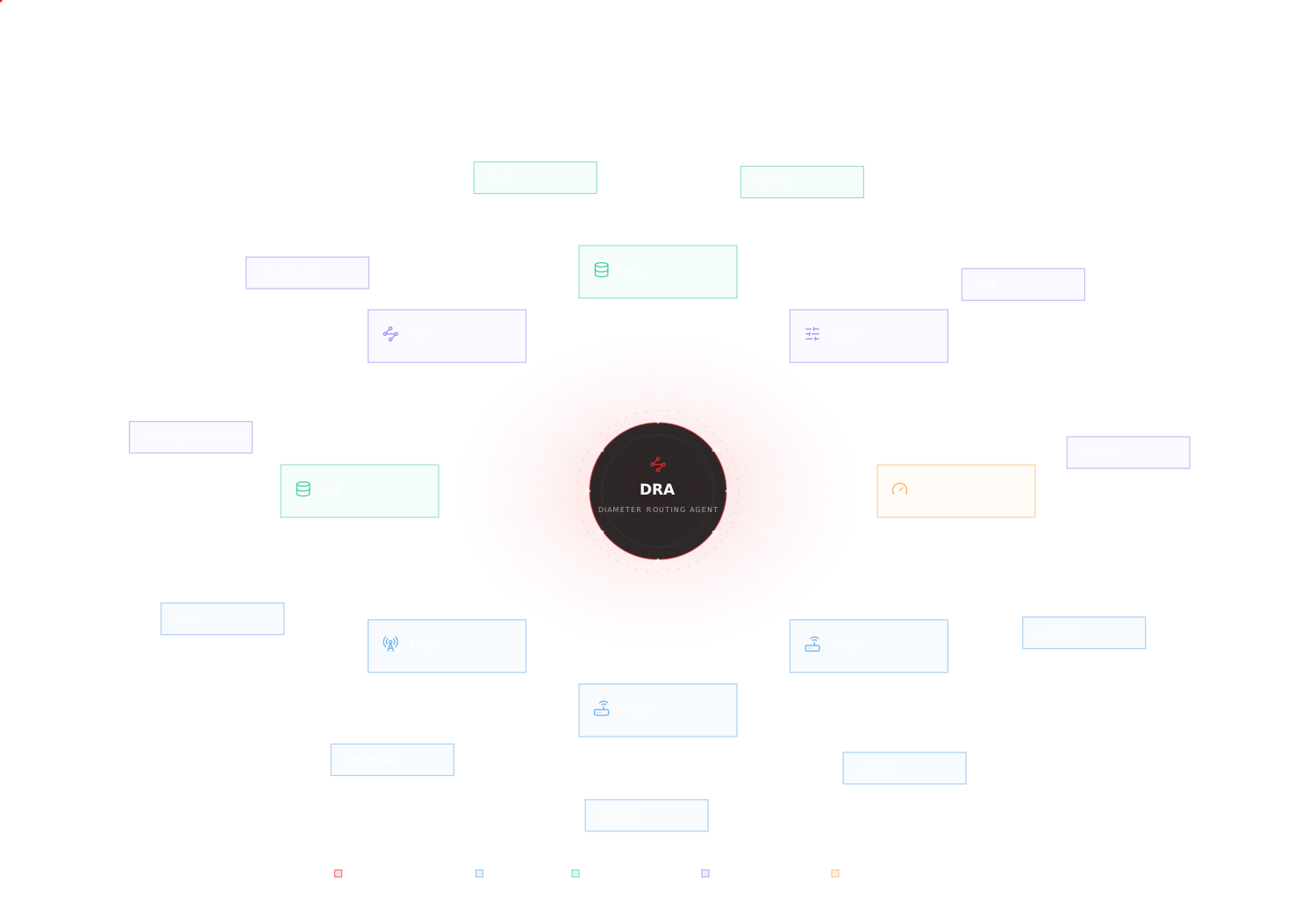
DRA — Diameter hub across the 4G core
Internal signalling, roaming control, number portability, screening — one hub.
Centralising internal Diameter signalling
An operator with MME, HSS, PCRF, OCS, SGW, and PGW points each at the DRA. A change to any element's address or capacity updates the DRA routing table. The other elements stay untouched.
Roaming Diameter control
Roaming partner connections terminate at the DRA. A new roaming agreement means one peer connection at the DRA boundary, not a configuration change across every internal element.
Signalling security and screening
Inbound Diameter messages from roaming partners are screened at the DRA boundary before reaching internal elements. Messages outside expected parameters are blocked without operator intervention.

Ouroboros is more agile and flexible than bigger ones. Its prices are competitive. The genuine expertise of the team enables a true dialogue with our partners.
Frédéric Maro
VP Network & Advanced Projects · Sierra Wireless
Hub-and-spoke Diameter topology
Every network element connects to the DRA once, replacing the N×N peer mesh. Adding a network element or roaming partner requires one configuration change, not N.
Real-time routing decisions
Routing tables update dynamically without interrupting in-flight Diameter sessions. Network topology changes such as new nodes or failed peers take effect without session loss.
Roaming partner boundary control
Inbound roaming Diameter traffic terminates at the DRA and is inspected before reaching internal elements. Roaming partner signalling is controlled at the perimeter, not managed per internal element.
Active-active geographic redundancy
DRA state replicates across sites. A site failure does not disrupt Diameter routing. Signalling continuity is maintained even during a primary site outage.
LTE coverage from one platform
The same DRA handles Diameter traffic for 4G network elements. Operators running both generations manage signalling routing from one platform.
The DRA is not a glamorous product. It is the element that makes the rest of the network manageable as it grows. Without it, every topology change propagates through the configuration of every element that connects to the changed component: a new node, a capacity upgrade, a new roaming agreement. With it, the change happens once.
The Ouroboros DRA is available standalone, on OPEX rental, and integrates with Diameter elements from any vendor. For operators adding LTE to a 3G core, or managing a growing roster of roaming partners, signalling control does not require a multi-vendor signalling portfolio.

How many Diameter-capable elements and roaming partners are you managing today? We'll show what the hub-and-spoke topology removes from your operations workload.
 Product datasheet
4G / LTE · 4G/LTE
Diameter Routing Agent (DRA)
An LTE core without a DRA needs every element to maintain a direct Diameter connection to every other. Six core elements and ten roaming partners means dozens of peer connections: each one a separate configuration to maintain, a separate failure point to monitor.
In production since 2004 · OPEX rental available · 99.999% availability
The peer mesh that grows with every change
Diameter is the signalling protocol that connects every element in an LTE core. The MME authenticates subscribers against the HSS. The PGW receives policy rules from the PCRF. The OCS tracks charging events. Every one of these exchanges requires a configured peer connection.
In a network without a DRA, every element connects directly to every other element it needs to reach. Add a new HSS node and every element that queries the HSS needs reconfiguring. Add a new roaming partner and every internal element that needs to accept their signalling needs a new peer connection. The mesh grows with every change. At scale, modifying the network topology becomes an exercise in touching dozens of configurations simultaneously.
The mesh becomes a hub.
A mesh that grows with every change
A Diameter network without a routing agent is a mesh: every element talks directly to every other element it needs to reach. Add a node, update a peer, onboard a roaming partner — and the configuration change propagates across the entire mesh.
Connect once, route everywhere
The Ouroboros DRA replaces that mesh with a hub. Every Diameter-speaking element in the network connects to the DRA once. The DRA routes each message to the correct destination — whether that is an internal element like the HSS or PCRF, or an external roaming partner's Diameter infrastructure. Elements do not need to know where other elements are located. They know the DRA's address.
Availability
Routing decisions happen in real time. When a roaming subscriber attaches, the MME's authentication request routes through the DRA to the appropriate home network HSS, with MNP handled on the way. When the PGW needs a policy update, the DRA routes it to the correct PCF instance. Load balancing across nodes, backup routes and failover are handled here.
Screened at the boundary
Inbound Diameter traffic from roaming partners is screened at the DRA boundary. Message type, origin realm, and destination realm filters apply before any traffic reaches internal elements. Malformed or unauthorised messages are blocked at the perimeter.
DRA — Diameter hub across the 4G core
How operators use it.
Internal signalling, roaming control, number portability, screening — one hub.
Centralising internal Diameter signalling
An operator with MME, HSS, PCRF, OCS, SGW, and PGW points each at the DRA. A change to any element's address or capacity updates the DRA routing table. The other elements stay untouched.
Roaming Diameter control
Roaming partner connections terminate at the DRA. A new roaming agreement means one peer connection at the DRA boundary, not a configuration change across every internal element.
Signalling security and screening
Inbound Diameter messages from roaming partners are screened at the DRA boundary before reaching internal elements. Messages outside expected parameters are blocked without operator intervention.
“Ouroboros is more agile and flexible than bigger ones. Its prices are competitive. The genuine expertise of the team enables a true dialogue with our partners.”
Frédéric Maro
VP Network & Advanced Projects · Sierra Wireless
Specifications.
Inside the platform.
Hub-and-spoke Diameter topology
Every network element connects to the DRA once, replacing the N×N peer mesh. Adding a network element or roaming partner requires one configuration change, not N.
Real-time routing decisions
Routing tables update dynamically without interrupting in-flight Diameter sessions. Network topology changes such as new nodes or failed peers take effect without session loss.
Roaming partner boundary control
Inbound roaming Diameter traffic terminates at the DRA and is inspected before reaching internal elements. Roaming partner signalling is controlled at the perimeter, not managed per internal element.
Active-active geographic redundancy
DRA state replicates across sites. A site failure does not disrupt Diameter routing. Signalling continuity is maintained even during a primary site outage.
LTE coverage from one platform
The same DRA handles Diameter traffic for 4G network elements. Operators running both generations manage signalling routing from one platform.
The DRA is not a glamorous product. It is the element that makes the rest of the network manageable as it grows. Without it, every topology change propagates through the configuration of every element that connects to the changed component: a new node, a capacity upgrade, a new roaming agreement. With it, the change happens once.
The Ouroboros DRA is available standalone, on OPEX rental, and integrates with Diameter elements from any vendor. For operators adding LTE to a 3G core, or managing a growing roster of roaming partners, signalling control does not require a multi-vendor signalling portfolio.
HSS
S6a authentication traffic between MME and HSS routes through the DRA. The HSS is one of the DRA's primary internal routing targets.
PCRF
Gx interface traffic between the PGW and PCRF routes through the DRA. Load balancing across PCRF instances is managed at the DRA.
vEPC
The MME, SGW, and PGW all generate Diameter signalling. All three connect to the DRA as their single signalling routing point.
Next step
How many Diameter peer connections does your network currently maintain?
How many Diameter-capable elements and roaming partners are you managing today? We'll show what the hub-and-spoke topology removes from your operations workload.