A stolen device that still works on your network is a compliance failure. An unconfigured device is a support call. One EIR handles both, from 2G through 5G SA, without a new platform at each generation.
Most EIR deployments check mobile identifier (IMEI) against a black/white list for one network generation. Move to 4G and the EIR does not follow. Add 5G SA and the problem repeats. Each generation becomes a separate platform, a separate vendor, and a separate support contract, for a function that is doing the same job each time.
The operational cost is not the additional hardware. It is the fragmentation. Device policy that should be consistent across the network is now split across three systems that do not automatically stay in sync.

Checked on every attachment
Every time a device attaches to the network, the network checks whether that device should be there. A handset on a stolen list that gets through is a compliance failure. A device on a managed enterprise whitelist that gets blocked is a service call. These checks happen on every attachment, in real time, on every generation the network runs.
Black, white, and grey lists
The Ouroboros EIR runs those checks across every generation the network carries, from a single deployment. Every IMEI is verified against white (permitted), grey (monitored), or black (barred) lists at attachment or at cell change. A blacklisted device is blocked immediately. A whitelisted device receives access according to its profile. A grey-listed device is tracked or subject to configured policy: monitored without an outright block.
One platform, every generation
A fast in-memory database handles attachment volume without adding latency to the procedure.
Welcome SMS and OTA built in
When a new subscriber attaches with a new device for the first time, the EIR can triggers a Welcome SMS automatically, with no external probing system required. The same event triggers OTA configuration, pushing APN settings and network parameters to the device before the subscriber notices they need configuring.
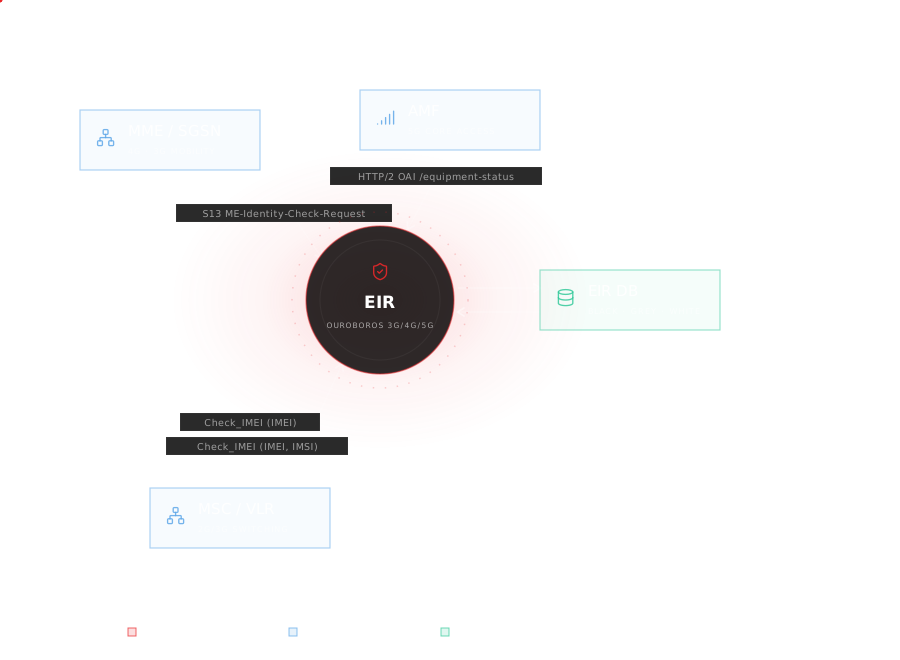
EIR — one equipment register from 2G to 5G
Stolen devices, enterprise whitelists, first-attach messaging and OTA — one register for all of it.
Block stolen or non-compliant devices
An IMEI reported stolen is added to the blacklist. Every subsequent attachment attempt is blocked immediately. Grey list policy handles devices under monitoring without a hard block.
Whitelist managed and enterprise devices
Operators providing managed services to enterprises define a whitelist of approved IMEIs. Only those devices access the dedicated APN or service tier. Non-listed devices are blocked or redirected without manual intervention.
Authorized brands
Regulator or operator can ban whole brand of phone.
Welcome SMS on first attachment
A new subscriber's first device attachment fires detect new roamer-in phone and trigger Welcome SMS.
5G SA device management
The OAI interface connects the EIR to 5G SA core functions. The same black, white, and grey list policy that governs older generations applies to 5G SA, managed from the one place.
National IMEI white list compliance
Regulatory obligations can request that a mobile to be accepted only if they had be legally sold (tax paid, identity checked).
Single deployment from 2G to 5G SA
One EIR instance handles IMEI checking across all network generations. 5G SA connects via the OAI interface without a separate deployment. No second vendor or second support contract when the network upgrades. Device policy stays consistent across generations automatically.
Fast in-memory database
IMEI lookups run in memory at every attachment event. Blacklist enforcement does not add perceptible latency to the attachment procedure.
Welcome SMS without probing systems
New subscriber attachment triggers a Welcome SMS directly from the EIR. No external signalling probe required. First-contact messaging deploys without adding a probe platform to the architecture.
Automatic OTA on first attachment
The EIR fires an OTA trigger the first time a new device attaches. Configuration reaches the device before the subscriber notices it needs setting up. Support calls for manual APN and MMS configuration drop without requiring separate provisioning logic.
Grey list for policy-based tracking
Devices sit on a grey list without a binary block or allow decision: monitored, flagged, or subject to conditional access. Regulatory obligations for device monitoring are met without removing the device from service.
Subscriber device tracing
Where national law permits, the EIR tracks which subscriber is using which device at any given time. Law enforcement requests are handled from the EIR without additional audit infrastructure.
The cost of fragmented device management adds up over time: separate deployments, separate upgrade cycles, separate support calls when a policy needs changing. Device policy stays consistent because it is held and enforced in one place, not split across systems that drift apart.
Functions that usually arrive as separate systems are built in here, so there are fewer integration points to commission and maintain. Operators run device access control and subscriber onboarding from one deployment. In production since 2004, for operators including O2, eir, and Elisa.
OPEX rental and CAPEX licence are both available. Device management can start at launch and grow with the subscriber base rather than ahead of it.

Which network generations are you running, and what device policy do you need to enforce? We'll propose an EIR configuration for what you run today and what you're building toward, on OPEX or CAPEX.